
Today, I want to talk about chord progressions, because they will be integral to your compositions. Sometimes, when I’m composing, I just like to try random chord progressions to see what works, but when someone’s first starting out, they’d probably appreciate to start with something a little more tried and true. So I’m going to teach two simple, but enjoyable chord progressions. My examples will be in C major, by the way. The first progression I’m going to start with is…
ii-V-I-vi
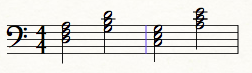
Or for those of us who can’t read Roman numerals: the 2-5-1-6 progression. It looks like a fairly simple progression and it is. This is a really fun progression to play, and, depending on how you play it, you can make a song sound happy, playful, or jazzy. This is a jazz chord progression (a really common jazz progression, I might add), but don’t worry! You can use it for a lot of other things, too. Sometimes, chord 6 is dropped and it just becomes the 2-5-1 progression, or some people play the 1-6-2-5 progression. Feel free to explore both!
I-vi-IV-V
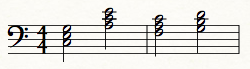
This is the 1-6-4-5 progression, an extremely common progression used in all sorts of songs, along with its counterpart 1-5-6-4. Maybe I should be showing less common progressions, but I felt like this one was hard to pass over since it’s used so much. There’s a reason some progressions are overused: because they sound nice. Either that or we are all just very unoriginal these days. But I’ll make up for being unoriginal because…
How to Make Common Chord Progressions Interesting
Sometimes, it’s just not enough to have chord progressions, especially when you have two really common, overused chord progressions, but there are ways to make these progressions a bit more interesting. First, try out flats, sharps, and sevenths. As an example, here’s a way to switch around the second chord progression I showed you and make it a little more fresh, because let’s be honest. We need some freshness!!!!!!
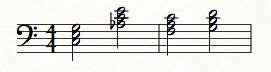
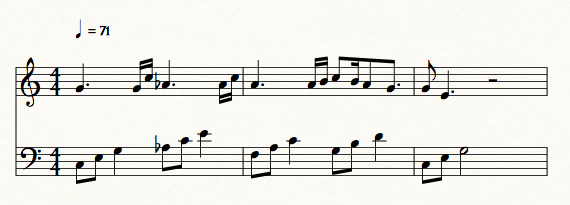
Try playing the 1-6-4-5 progression, then try playing the progression with the A flatted. Notice what a difference one flat can make. You might be wondering, “How on earth would I use this chord progression with this random flat?” As an example, at the bottom of this post, I have written a simple, short melody that works with this chord progression. Anyway, so the point is that you don’t have to stick with overused chord progressions. Don’t be afraid to try out flats or sharps! I’m adding a link to a helpful website that explains further and does a really good job explaining and teaching, so feel free to check it out!
How to Write Interesting Chord Progressions: Chromatic Alterations
 Basics of Creating Music
Leave a comment